
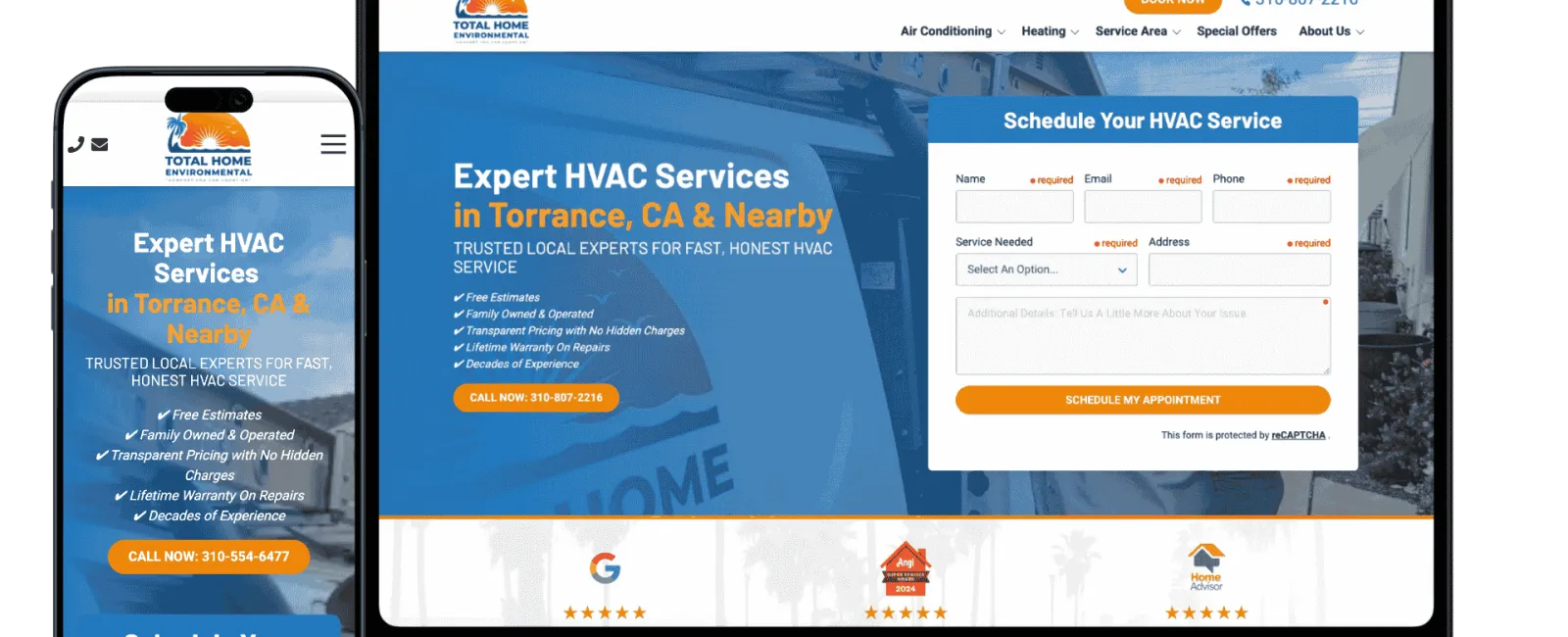
If you run an HVAC business, you already know the feast-or-famine cycle. Summer and winter bring a flood of emergency calls, but the shoulder seasons can leave your trucks sitting idle and your crew checking their phones. The difference between HVAC companies that grow steadily and those that stall out almost always comes down to one thing: a reliable system for HVAC lead generation that works year-round, not just when the weather cooperates.
The good news is that homeowners search for heating and cooling help every single day. In fact, keywords related to HVAC services receive tens of thousands of searches per month across the United States. The challenge is making sure those searches lead to your phone ringing instead of a competitor's. Below are seven practical, proven strategies to generate more HVAC leads without blowing your entire marketing budget on expensive lead-buying services.
1. Claim and Optimize Your Google Business Profile
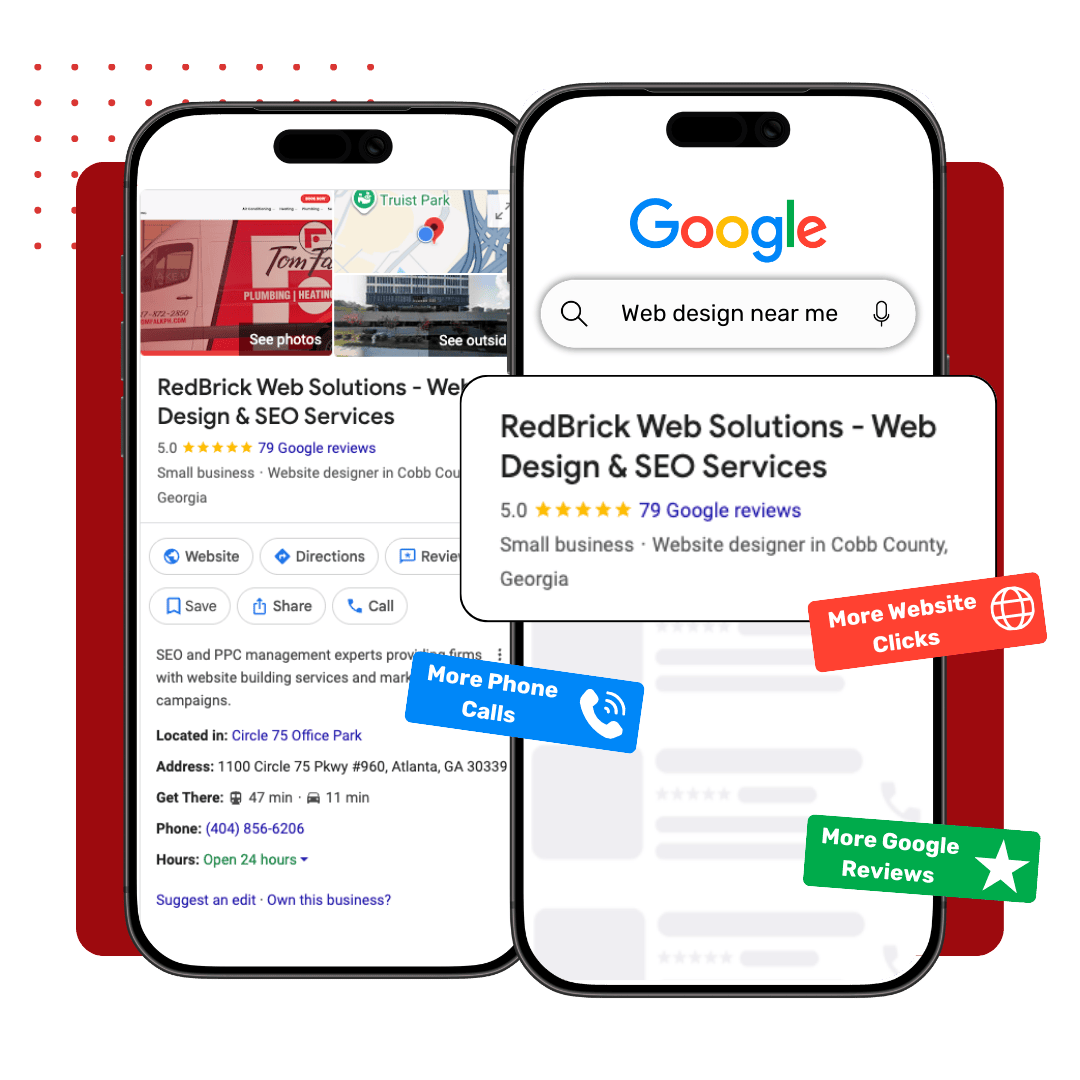
When a homeowner's furnace dies at 10 p.m., the first thing they do is grab their phone and search "HVAC repair near me." Google's Local Pack — that map with three business listings at the top of the results — is where most of those clicks go. If your Google Business Profile isn't fully optimized, you're invisible during the moments that matter most.
Here's what a fully optimized profile looks like for an HVAC company:
- Accurate NAP info: Your business name, address, and phone number must match exactly across every listing online. Even small inconsistencies (like "St." versus "Street") can hurt your local rankings.
- Service categories: Select every relevant category — HVAC contractor, air conditioning repair service, furnace repair service, and so on. Many HVAC businesses only pick one and miss out.
- Photos and posts: Upload real photos of your team, your trucks, and completed jobs at least once a month. Businesses with 100+ photos get 520% more calls than the average listing, according to Google's own data.
- Reviews: Ask every satisfied customer for a Google review. Respond to every review — positive or negative — within 24 hours. Review velocity and recency are ranking factors that directly affect your visibility.
This single step is the highest-return HVAC marketing tactic available because it's free and it targets people who are actively looking to hire right now.
2. Build a Website That Converts Visitors Into Calls
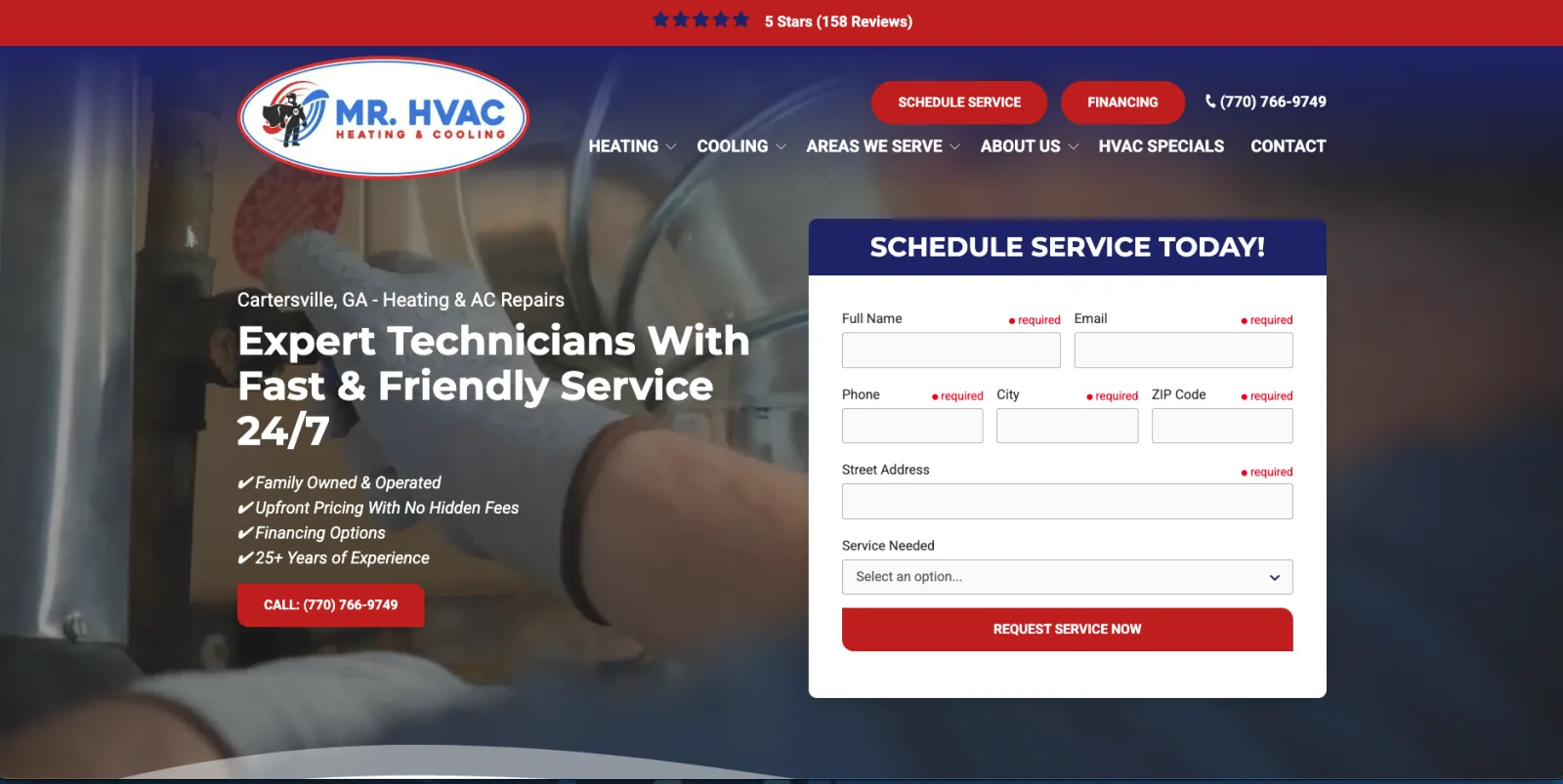
Getting traffic to your website is only half the battle. If visitors land on your site and can't figure out how to contact you within five seconds, they'll hit the back button and call someone else. For HVAC companies, your website needs to function as a 24/7 sales rep, not a digital brochure.
The essentials of a high-converting HVAC website include:
- Click-to-call buttons on every page, especially on mobile. Over 60% of home services searches happen on smartphones.
- Dedicated service pages for each offering — AC repair, furnace installation, duct cleaning, heat pump service, and so on. Each page should target specific keywords that homeowners actually search for.
- Trust signals front and center: Display your license numbers, insurance info, manufacturer certifications, and badges from the BBB or trade associations. Homeowners are letting you into their homes — they need to trust you first.
- Fast load times: If your site takes more than three seconds to load, roughly half your visitors will leave. Compress images, use modern hosting, and test your speed regularly with Google PageSpeed Insights.
A well-built website doesn't just look professional — it becomes your most consistent source of HVAC leads over time, especially once your SEO efforts start compounding.
3. Invest in Local SEO to Rank for HVAC Searches
Local SEO is the process of optimizing your online presence so that your HVAC business shows up when nearby homeowners search for the services you offer. Unlike paid ads that stop working the moment you pause your budget, local SEO builds an asset that generates leads month after month.
The core elements of a local SEO strategy for HVAC companies include:
- Location-specific content: Create pages targeting each city or neighborhood you serve. A page titled "AC Repair in [Your City]" with locally relevant content will outperform a generic services page every time.
- Consistent citations: Make sure your business info is listed accurately on Yelp, Angi, HomeAdvisor, the BBB, and industry-specific directories. These citations reinforce your legitimacy to Google.
- On-page optimization: Use relevant keywords naturally in your page titles, headings, meta descriptions, and body content. Don't stuff keywords — write for humans first, then make sure search engines can understand what each page is about.
- Backlink building: Earn links from local organizations, suppliers, and community sites. Sponsoring a little league team or joining the local chamber of commerce can earn you valuable backlinks while building community goodwill.
HVAC businesses that commit to local SEO typically see meaningful results within three to six months, and the leads that come through organic search tend to convert at a higher rate because the homeowner found you — you didn't interrupt them with an ad.
4. Use Google Ads to Capture High-Intent Searches
While SEO builds long-term momentum, HVAC advertising through Google Ads can start driving calls within days. The key is targeting the right keywords with the right ad types.
Google Local Services Ads (LSAs) are particularly powerful for HVAC companies. These are the "Google Guaranteed" listings that appear at the very top of search results, above even traditional pay-per-click ads. You only pay when a homeowner actually contacts you through the ad, and the Google Guaranteed badge builds instant trust.
For traditional search ads, focus your budget on high-intent keywords like "AC repair near me," "emergency furnace repair," and "HVAC installation quote." Avoid broad terms like "HVAC" or "air conditioning" — they attract tire-kickers and burn through your budget fast.
A few tips to keep your cost per lead manageable:
- Set up call tracking so you know exactly which keywords and ads are generating real phone calls, not just clicks.
- Use ad scheduling to run ads during your business hours, or when your team can answer the phone promptly.
- Create separate campaigns for emergency services (high urgency, high conversion rate) and planned installations (longer sales cycle, higher ticket value).
Most HVAC businesses see the best results when they use Google Ads and SEO together — ads provide immediate leads while SEO builds a foundation for the future.
5. Generate Reviews That Sell for You
Online reviews are the modern version of word-of-mouth, and for home services businesses, they are arguably the single most influential factor in a homeowner's decision. A BrightLocal survey found that 98% of consumers read online reviews for local businesses, and HVAC companies with higher ratings consistently report more inbound calls.
Building a review generation system doesn't require fancy software. It requires consistency:
- Ask at the right moment: The best time to request a review is immediately after a successful service call, when the customer is most satisfied. Train your technicians to mention it before they leave, then follow up with a text or email containing a direct link to your Google review page.
- Make it easy: Create a short URL or QR code that takes customers straight to the review form. Every extra click you require cuts your review rate in half.
- Respond to every review: Thank happy customers by name and address complaints professionally and promptly. How you handle a negative review tells future customers more about your business than a dozen five-star ratings.
As your review count and average rating climb, you'll notice a compounding effect: more reviews lead to better local rankings, which lead to more visibility, which lead to more customers — and more reviews. This cycle is one of the most sustainable forms of HVAC lead generation available.
6. Stay Top of Mind With Email and Direct Mail
Not every lead is ready to buy today. A homeowner who got a furnace tune-up from you last fall might need a full system replacement next year. If you're not staying in touch, a competitor will be the one they call when that day comes.
Email marketing is the most cost-effective way to nurture your existing customer base. A simple monthly newsletter with seasonal maintenance tips, special offers, and company updates keeps your name in their inbox without being pushy. Segment your list so that customers with older systems receive targeted upgrade offers, while newer-system customers get maintenance reminders.
Don't overlook direct mail, either. In an era when every business is fighting for attention in the inbox, a well-designed postcard or flyer can stand out in a physical mailbox. Seasonal tune-up offers mailed four to six weeks before peak heating or cooling season consistently deliver strong ROI for HVAC companies.
The key metric to watch here is customer lifetime value. Acquiring a new customer costs five to seven times more than retaining an existing one, so every dollar you spend keeping past customers engaged pays back many times over.
7. Track Everything and Double Down on What Works
The biggest mistake HVAC business owners make with marketing isn't choosing the wrong strategy — it's failing to measure results. If you don't know which channels are generating your best leads, you can't make smart decisions about where to invest.
At minimum, you should be tracking:
- Call source: Use unique tracking numbers for your website, Google Ads, Google Business Profile, and any other lead sources so you can attribute every call to a specific channel.
- Cost per lead: Divide your total marketing spend per channel by the number of leads it generated. This tells you where your money is working hardest.
- Booking rate: What percentage of leads actually schedule an appointment? A low booking rate might mean your CSRs need training, not that your marketing is broken.
- Revenue per channel: The ultimate measure. A channel that produces fewer leads but higher-ticket jobs might actually be your most profitable source.
Review your numbers monthly. Cut what isn't working, reinvest in what is, and run small experiments with new channels or tactics every quarter. The HVAC companies that grow fastest aren't the ones with the biggest budgets — they're the ones that know their numbers and act on them.
Start Filling Your HVAC Schedule Today
Effective HVAC lead generation isn't about finding one magic bullet. It's about building a system of complementary strategies — a strong Google Business Profile, a website that converts, local SEO, targeted ads, a steady stream of reviews, customer nurturing, and data-driven decision making — that work together to keep your phones ringing in every season.
You don't have to tackle all seven strategies at once. Pick two or three that align with where your business is right now, execute them well, and build from there. If you're not sure where to start, or you'd rather focus on running your HVAC business while someone else handles the marketing, the team at RedBrickWeb.com specializes in helping home services companies build lead generation systems that deliver real, measurable results. Reach out for a free consultation and let's talk about what's possible for your business.


