

Most homeowners decide which roofing contractor to call before they ever pick up the phone. They Google "roofing company near me," scroll through a few results, glance at each website for about eight seconds, and then call the one that looks the most trustworthy.
If your roofing website design is outdated, slow, or hard to navigate, those potential customers are clicking straight to your competitor. The good news: you do not need a massive budget or a tech background to build a site that converts visitors into booked jobs. You just need to know what actually matters.
This guide breaks down exactly what roofing contractors need on their websites, from the must-have pages to the local SEO tactics that help homeowners find you in the first place.
Why Your Roofing Website Is Your Most Important Sales Tool
Think about how homeowners find a roofer today. After a storm rolls through, they are not calling a neighbor for a referral first -- they are grabbing their phone and searching. According to Google, 76% of people who search for something nearby on a smartphone visit a business within a day. For a roofing company, that means your website is often the first impression you make, and it needs to do a lot of heavy lifting in a very short window.
A well-built roofing website does three things at once. It shows up in search results when homeowners are looking for help. It builds enough trust that the visitor picks up the phone. And it makes it as easy as possible for that visitor to actually contact you. Remove any one of those three elements and you leave real money on the table.
The average roofing job is worth anywhere from $8,000 to $25,000 or more. Even one extra lead per month from your website can transform your business over a year. That is why digital marketing for roofing contractors is one of the highest-ROI investments available to small roofing businesses.
The Pages Every Roofing Website Must Have
A lot of roofing contractors have a website that is really just a digital business card: a home page, a contact page, and not much else. That structure leaves serious gaps. Here are the pages that high-converting roofing websites actually include.
A Homepage That Answers the Right Questions Fast
Your homepage has one job: convince a nervous homeowner that you are the right call. Within the first few seconds, a visitor should be able to see your service area, the types of roofing you do (residential, commercial, storm damage), and how to reach you. Place your phone number prominently at the top -- ideally as a clickable link so mobile users can tap to call instantly. Add a short, clear headline that speaks to the customer's need, something like "Roof Repairs and Replacements in [City Name] -- Licensed and Insured."
Service Pages for Each Type of Work You Do
Many roofers lump everything onto one generic "Services" page. A better approach is to give each major service its own dedicated page: roof replacement, roof repair, storm damage repair, gutters, commercial roofing, and so on. Each of these pages can rank in Google for its own keyword, multiplying the number of ways homeowners can find you. It also signals to visitors that you are a specialist, not just a generalist who does a little of everything.
A Reviews and Testimonials Page (or Section)
Homeowners choosing a roofer are making a decision about one of the biggest investments they will ever make. They want proof that you deliver. Dedicate real estate on your site to reviews from past customers. Pull in your Google reviews, display before-and-after photos, and include short testimonials from real clients in your area. If you have any manufacturer certifications (GAF Master Elite, Owens Corning Preferred, etc.) display those prominently too. These trust signals do more selling than any copywriting ever could.
A Frequently Asked Questions Page
Homeowners have a lot of questions before they commit to a roofing project: How long does a roof replacement take? Will my insurance cover this? What are the signs I need a new roof? A thorough FAQ page answers these questions before the customer has to ask, which builds trust and keeps them on your site longer. It also happens to be great for roofing SEO marketing -- Google loves pages that answer specific questions people are searching for.
A Contact Page With Multiple Options
Some people want to call. Others prefer to fill out a form or request a quote online. Give visitors both options. Keep your contact form short -- name, phone, email, and a brief description of the project. The more friction you add, the fewer form submissions you will get. Also embed a Google Map so visitors can quickly confirm you serve their area.
Design Elements That Build Trust at a Glance
Great roofing website design is not about flashy animations or trendy color palettes. It is about removing doubt in the mind of a stressed homeowner. Here are the visual and structural elements that accomplish that.
Real photos, not stock images. Nothing undermines credibility faster than generic photos of smiling workers that clearly have nothing to do with your company. Invest in even a basic photo shoot of your crew, your trucks, and your completed projects. Real photos of real work in your real service area are worth their weight in gold.
Licensing and insurance badges. Display your contractor license number, proof of insurance, and any industry certifications right on the homepage. Homeowners are legally and financially on the hook if an unlicensed contractor gets hurt on their property. Making this information easy to find removes a significant barrier to calling.
A clear, repeated call to action. Every page on your site should have a clear next step for the visitor. That usually means a "Get a Free Estimate" button or a phone number displayed in the header, the body, and the footer. Do not make visitors hunt for a way to contact you.
Mobile-friendly layout. More than 60% of local service searches happen on mobile devices. Your roofing website design needs to look and function perfectly on a phone screen. Buttons should be large enough to tap easily, text should be readable without zooming, and the page should load in under three seconds. A slow or hard-to-use mobile experience will cost you calls.
Local SEO for Roofing Companies: Getting Found Before Your Competitors
Having a beautiful website means nothing if no one sees it. Local SEO for roofing companies is the set of strategies that help your site show up when homeowners in your area search for roofing help. Here is where to focus your energy.
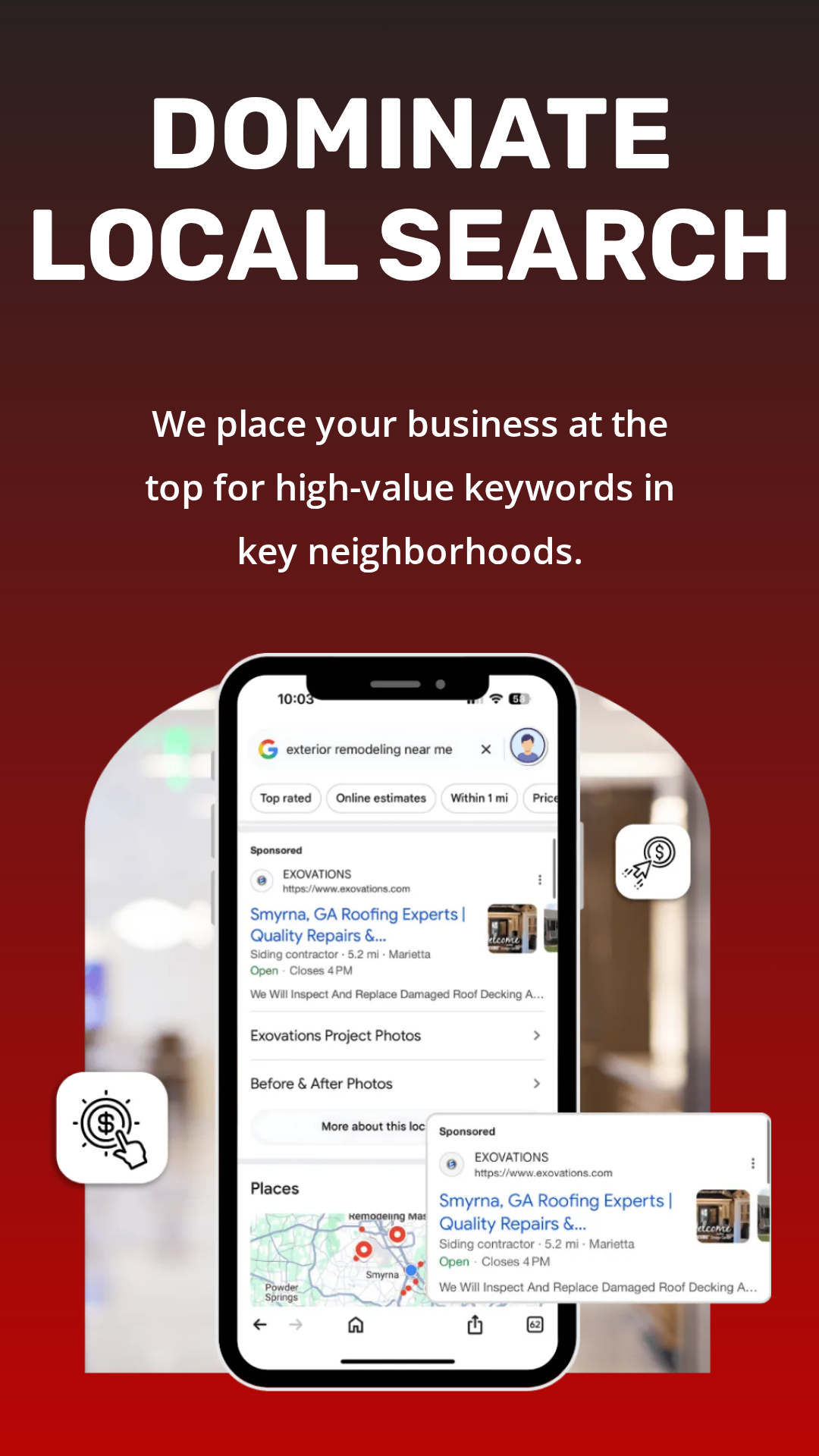
Google Business Profile. Claim and fully complete your Google Business Profile. Add photos, respond to reviews, list all your services, and keep your hours updated. Your GBP listing often shows up above organic search results in what is known as the "Local Pack" -- the map with three local businesses displayed. This is prime real estate for roofing leads.
Location-specific pages. If you serve multiple cities or towns, create a dedicated page for each one. A page titled "Roof Repair in [City Name]" that includes local landmarks, common weather challenges in that area, and customer reviews from that city will outrank a generic statewide competitor every time.
Consistent NAP information. Your business Name, Address, and Phone number should be exactly the same across your website, Google Business Profile, Yelp, Angi, HomeAdvisor, and any other directory. Inconsistencies confuse search engines and can quietly drag down your rankings.
Blog content that answers local questions. Publishing articles like "How to Spot Roof Damage After a Hailstorm in [City]" or "When Should [City] Homeowners Replace Their Roof?" gives Google fresh, locally relevant content to index and gives homeowners a reason to trust you before they even call.
Common Roofing Website Mistakes That Cost You Leads
Even contractors with good intentions make design and strategy errors that quietly kill their conversion rate. Watch out for these common pitfalls.
No clear service area. If a visitor cannot tell in five seconds whether you serve their zip code, they are gone. State your service area clearly on the homepage and in the footer.
Missing or buried contact information. Your phone number should appear in the top right corner of every page, full stop. It should also be a clickable link on mobile.
Slow load times. A site that takes more than three seconds to load loses roughly half its visitors before they see a single word. Compress your images, use a quality hosting provider, and consider a caching plugin if your site runs on WordPress.
No social proof above the fold. Many roofing sites bury their reviews at the bottom of the page. Move your star rating, review count, or a standout testimonial to the very top of the homepage. Let it be one of the first things a visitor sees.
Generic copy that could apply to any contractor. "We are a family-owned roofing company committed to quality and customer satisfaction" describes about 40,000 roofing businesses in the United States. Get specific. How many years have you been in business? How many roofs have you replaced? What makes your crew different? Specificity builds trust; vague claims do not.
Ready to Build a Roofing Website That Actually Brings In Leads?
A strong roofing website design is not a one-time project -- it is an ongoing investment in your business's growth. The best sites combine clean, fast design with the kind of local SEO and trust-building content that turns a hesitant homeowner into a booked appointment. Getting all of that right takes expertise across web design, copywriting, and digital marketing for roofing contractors.
If you would rather spend your time on roofs than on website strategy, that is exactly what RedBrickWeb.com is built for. The team at RedBrick specializes in web design and marketing for home services contractors, including roofing companies across the country. From building high-converting websites to managing ongoing roofing SEO marketing and Google Ads campaigns, RedBrick handles the digital side so you can focus on the work. Reach out at RedBrickWeb.com to learn what a better website could mean for your business.

